Showing posts with label Black History Month. Show all posts

Thursday, 27 February 2014

Black History Month: Emily Jazmin Tatum Perez

Shalom:
The story I share today, comes from Brown Girl "Herstory" on face book. I love this site. So many wonderful, inspiring stories of women of colour. Some stories I know, many I don't, but each has encouraged me in some form.
Today's Brown Girl 'Herstory is about  2nd Lieutenant Emily Jazmin Tatum Perez was born on February 19th, 1983.

Perez was born in Heidelberg,West Germany. The daughter of African American and Hispanic parents in a U.S. military family, she graduated from Oxon Hill High School in Maryland, where she was she was wing commander of Junior ROTC.  the first female of colour Cadet Command Sergeant Major in the history of the United States Military Academy at West Point, she was wing commander of Junior ROTC. 
From what I have read about this remarkable young lady, who only walked amoung us 23 years, she was the apple of not only her parents, Daniel and Vicki's eyes, but to her big brother, Kevyn, loving known to her as Bubba. It seems that little Emily was Bubba's shadow.
She also had a love of G-d at an early age. Loved attending church and at age six, was baptized along with her family. She sang in the children's choir and then the youth, helping with ushering and even tutoring. What an shining of a g-dly young woman. This g-dly spirit extended to her turning her attention to the suffers of the HIV-AIDS virus. 
 In 2000, while in high school Emily focused her passion on the ministry of HIV/AIDS due to her love for Mr. Teddy, an extended family member.  She met with her godfather to discuss the need for a HIV/AIDS ministry which resulted in the beginning of the Peace Baptist Church Shekinah Ministry.  She also became an HIV/Aids peer educator with the Alexandria Red Cross Chapter and the Red Cross National Chapter.  In 2001, she was honored by the Red Cross Board of Governors for her endeavors and contributions to the HIV/AIDS epidemic.
As one who use to be a Care-giver to those with AIDS, Emily is truly one of my heroes.
Upon graduating from high school, Emily entered the United States Military Academy at West Point, where she was an exemplary student and talented track athlete. 
Following her graduating from West Point, she was commissioned a Second Lieutenant in the 204th Support Battalion, 3nd Brigade, 4th Infantry Division of the Untied States Army.
 Emily would be deployed to Iraq in December 2005 as a Medical Service Corps officer. Sadly She was killed when a makeshift bomb exploded near her Humvee during combat operations in Al Kifl, near Najaf, in September 2006.
Lieutenant Perez's military awards include the Bronze Star, Purple Heart, Army Commendation Medal, National Defense Service Medal, Iraq Campaign Medal, Global War on Terrorism Service Medal, Army Service Ribbon, Overseas Service Ribbon, and the Combat Action Badge. She posthumously received the NCAA Award of Valor in 2008.

For one so young, she touched and inspired so many lives, so many who mourn her passing, but give thanks for her life.
Mark and I both gave a quick prayer of thanks for this remarkable young woman and pray G-d's comfort to her parents, big brother and his family as well as those who knew and loved her.
 

Friday, 21 February 2014

Black History Month: Bill Clemons


Shalom:
I had planned another post for today. However, a few hours ago, I learned of the passing of a dear friend,

Captain William (Bill) Melvon Clemons, Retired, US. Marines.

Bill was proud to be An American, and served his nation in the Marine Corp. A Sax player, he also had an amazing voice. I loved hearing his stories about his days as a Marine band officer. However, I also loved hearing the stories of how he met his beloved Trish and stories about their family.

We attended the same church for years, I watched his children grow up, loved watching Bill with his wife Trish. We were in choir together and he was a role model to many a young man coming up in the church. Bill and his children often sang together, my favorite song the family sang was "G-d Bless the USA."

I am getting teary in memory….

When he retired from the service, he went on teach music at the Governor's School in Virginia, where he continue to touch lives with his gift of music.

However, the most important thing about Bill, next to his love of his wife, children and grandchildren, was his faith. A humble, sweet man, his love of G-d and His Word was not only well known, but an encouragement to all who known him. Perfect by no means, there was a Holy light, the Light of G-d that shone in his eyes as well as his smile.

By the time I married Mark, the Clemons had moved out of state. There were so many people I wanted Mark to meet; Bill and Trish were close to the top of that list. Sadly, it was at the funeral for Bill's mother that I was able to introduce my husband to Bill and his family. What a proud moment to introduce "Captain Clemons" to "Captain Reel." Even in his own moment of sorrow, Bill took time to pray with Mark before his upcoming deployment.

On 4th February, there was a fire in the Clemons home. A neighour manage to drag Bill out of the house. Suffering burns about 70% of his body, the doctors fought to save his life. However, despite their efforts, G-d saw fit to end Bill's suffering and take him home. 

I was at a coffee café, just getting online when I saw the post about Bill's services and dropped my coffee cup. It wasn't the news I expected. However, I rest in the fact that he is not in pain and with the G-d, he loves and encourages others to know.
 

"I am proud to be an American. In this country, we have the freedom to marry the one we love." Bill Clemons.
I mourn the death of my friend and spiritual big brother. One of this nation's heroes, husband, father, grandfather.
Faithful man of G-d.


Thursday, 20 February 2014

Black History Month: Good Times.

Shalom:
It was the 1970s. It one the Golden age of Black TV. In no time, before or since, with the exception of the 1980s, African Americans from all walks of life entered into American living rooms. Amoung them, my personal favorite, Good Times.
Good Times was the story of James and Florida Evans and their three teenage children, an 1974 Walton family, living in the Projects.
 The series starred the late Esther Rolle as Florida Evans and the late John Amos  her husband, James Evans Sr.
We first meet Florida in the sitcom Maude, the housekeeper of Maude Findlay, in Tuckahoe, New York. Her husband, then known as Henry Evans was employed as a firefighter. Florida's character was so popular, the show's  producers decided to feature the Florida character in her own show.
But there would be several changes to the Evans family history. Henry's name would become James, there is no mention of Maude Findlay, and the couple now live in Chicago.
Florida and James Evans and their three children live in a rented project apartment, 17C, at 963 N. Gilbert Ave., in a housing project in a poor, black neighborhood in inner-city Chicago. A life known to many of the show's fans.
 Florida's and James's children were James Jr, better known as "J.J." Thelma and Michael. When the , J.J. and Thelma are about a year apart in age, seventeen and sixteen years old, respectively, while Michael, called "the militant midget" by his father due to his passionate for his "people's rights" is eleven years old. Florida's best friend is the lively, exuberant Willora Woods, a divorcée who works at a local boutique. A few years later, Willora later go on to adopt an abused child, Penny (played by Janet Jackson)
As was the case on other Norman Lear sitcoms, Good Times was   a breakthrough for American television. Never before had a weekly series featured black characters living in an city setting.
 Good Times deal with the Evans family attempts to survive in a high rise project building in Chicago, despite their poverty. When he is not unemployed, James Evans is a man of pride who often stated he would not accept charity. He usually works at least two jobs simultaneously, from a wide variety such as dishwasher, construction laborer, etc. When he has to, he plays pool in order to hustle money, though Florida, a righteous woman, disapproves of this. JJ, a budding artist, "finds" (steals) his art supplies, something his parents do not approve of. Thelma, as smart as she is beautiful, tries her hand at several fields as she seeks her life path. Whereas Michal is headed for the Supreme Court as the nation's first black Supreme Court Judge.
I could relate to the Evans family; a strong mother who booked no nonsense. Like JJ, I painted and dreamed of seeing my painting admired by the world. Like Thelma, I love music, books dance and writing. Like Michael, I had to make do with a sub-standard education, with second hand, dated books that made me seek more.
The show dealt with serious topics, such as drugs, gangs, education and race, in a comedic way, while along the was providing positive characters for viewers. Sadly, many a project home, there is no father, and James role as a strong, firm, yet loving husband and father was showcased almost weekly until John Amos's character was killed off in a car accident. Then Florida, stepped up to the plate as a single mum, carrying that weigh too many single mothers know.
While the show was to really to showcase the talents of Esther Rolle and John Amos, the character that quickly over shadowed was JJ Evans. As the series progressed, Ms. Rolle and  Mr. Amos grew increasingly disillusioned with the direction the show was taking, especially with J.J.'s antics and stereotypically buffoonish behavior in the storylines. By season three, Good Times became the JJ Evans show.
But with his father's death, JJ began to grow up and become the man his father knew he really was. By the end of the run, Florida had remarried, but was widowed once more. Willora Woods had gone a much better job and was moving out of the projects. JJ also was leaving, his comic character, based on his little sister was a success and he too was moving out. Michael, now in college was ready to experience college life. And Thelma, now married, expecting her first child was moving out as well, offering for Florida to move in with her and her husband. Turns out that Thelma's husband has brought a Condo, in the same building as Willora, so the women remain neighours.
I taped the last season and still have it, for it was my favorite. Yes, the Evans handled their state with grace, class and laugher. But with hope. Hope that their lives would one day improve. James Evans dreamed of moving his family out of the projects.
And while he could only witness that dream come true from TV heaven, The Evans dream is a dream many Americans also share in.

Saturday, 15 February 2014

Black History Month. Mama Jordan

Shalom:
Today black history's entry is about the most amazing woman I know.
Mama Jordan.
Today is my mother's 80th birthday.
She chose a quiet celebration of Chinese Food and rocky road ice cream. But that hasn't stopped the phone calls from her family and friends wishing her a blessed birthday.
I always thought it was so cool that Mummie was born smack in the middle of Black History Month.
Even better, I can look at my mother's life and see how far this nation has come in terms of race relations and how far we still need to go.
My mother was born in Alabama, the year 1934. A Depression Baby, mummie was the youngest of seven children to Callie and Pink Prude.
An early bird, Mummie finished high school at age seven-teen, going on to business school to begin her career as an Office Administer. This included her position as an office account and later becoming a legal secretary of the Boston Law firm, Hill and Barrow. 
Born Maggie Lee, as an adult mummie changed her name to Margaret, a clear sign that she was in charge of the life G-d has given her. To this day, few, other than nieces and nephews, get away with calling her Maggie.
Marriage wasn't the cards for Mummie, though she did try. She and my step-father separated, but never divorced. She had two children, Elayne and Eileen. Both proved in her words to be: "a delight and a challenge."

During her growing up years, we were known as "Negros" and "Coloured." By the time my sister and I were growing up, we were "Blacks" and today "African American." But she always made my sister and I aware of who we are, as Americans as well as women of colour, for she has always been proud of both. She made sure we knew our culture as Blacks and as Americans, making sure we knew that the two were interwoven.
I remember the summer day in 1968, when the afro was beginning to take hold. Black men and women alike were embracing the ethic look that was our own. Dad had already gotten his afro and cut and framed mummies'. Eileen was need and then I. Mummie sat me down and we had a heart to heart about this. I loved my long hair (it was down my back) and getting my hair cut that short was a huge step. Once it was gone, it couldn't be glued back on. But I really thought I wanted it and when Dad was finished, I cried buckets, holding my hair. Only Mummie could comfort me, reminding me it was my choice, that she warned it was going to be a drastic change, not only in my looks, but just losing so much hair. How wise she was, to allow me to make that choice, making clear I knew the consequences of that choice.
I look back and see how many times my mum warned me of an course of action; sometimes I listened, sometimes, I didn't. These days, I have learned to not only listen, but to follow her words of wisdom.
One of the greatest lessons from my mother, she never allowed us to blame anyone or anything for our failures or bad choices. The world would be crude; we knew that. There would be people would not like us because of our skin colour, our faith, that we were Americans, women and all the above. But that was no excuse for not trying.
Yes, there were roadblocks, but not like the ones she grew up with. She grew up during a time where her skin colour decided what school she could attend, where she sat on the bus and what church she could worship at. I had no such concerns.
There were places where she could only go through the back door, use the water fountain or washroom marked "Coloured."
And despite all of this, she rose to the top of her chosen career and is today honoured by men and women from all walks of life.
I often tell Mummie I want to be just like her when I grow up. She just laughs.
Living in Montana, I don't see her as I would like, but I am blessed to speak to her very few days, hearing her voice, her laugh lifting my spirits during my struggles.
My role model, my chief cheerleader, my friend, my mum.
I am so truly blessed to have this amazing lady in my life.
I love you, Mummie.
 

Friday, 7 February 2014

Langston Hughs Part 2

Shalom:
The Harlem Renaissance was a phase of a larger New Negro movement that had emerged in the early 20th century and in some ways ushered in the Civil Rights Movement of the late 1940s and early 1950s. It was the hay day of Black culture; where people from all over America came to celebration African American culture.

 The social foundations of this movement included the Great Migration of African Americans, including my grandmother and her children from rural to urban spaces and from the South to the North; dramatically rising levels of literacy; the creation of national organizations dedicated to pressing African American civil rights, “uplifting” the race, and opening socioeconomic opportunities; and developing race pride, including pan-African sensibilities and programs. Black exiles and expatriates from the Caribbean and Africa crossed paths in metropolis such as New York City and Paris, after World War I and had an invigorating influence on each other that gave the broader “Negro renaissance” (as it was then known) a profoundly important international cast, including black artists, writers, plays, books and music.
Amoung these artist, was the poet-writer, Langston Hughs.
When one thinks of the Harlem Renaissance, Langston Hugh's name is usually amoung the first to come up.
As stated in part one on this post about Hughs, Langston was a proud black man, proud of his heritage and of his people, a pride reflected in his work. He identified unashamedly black at a time when blackness was démodé. He stressed the theme of "black is beautiful" as he explored the black human condition in a variety of depths.  His main concern was the uplift of his people, whose strengths, resiliency, courage, and humor he wanted to record as part of the general American experience.
His poetry and fiction portrayed the lives of the working-class blacks in America, lives he portrayed as full of struggle, joy, laughter, and music. Permeating his work is pride in the African-American identity and its diverse culture.
"My seeking has been to explain and illuminate the Negro condition in America and obliquely that of all human kind," Hughes is quoted as saying. He confronted racial stereotypes, protested social conditions, and expanded African America’s image of itself; a “people’s poet” who sought to reeducate both audience and artist by lifting the theory of the black aesthetic into reality. He wrote novels, short stories, plays, poetry, operas, essays, and works for children. With the encouragement of his best friend and writer, Arna  Bontemps  and patron and friend, Carl Van Vechten, he wrote two volumes of autobiography, The Big Sea and I Wonder as I Wander, as well as translating several works of literature into English.
Hughes wanted young black writers to be objective about their race, but not to scorn it, be ashamed or flee from it. He understood the main points of the  Black Power movement of the 1960s, but believed that some of the younger black writers who supported it were too angry in their work, while many young black writers thought him a sell out. Hughes's work Panther and the Lash, posthumously published in 1967, was intended to show solidarity with these writers, but with more skill and devoid of the most virulent anger and racial chauvinism some showed toward whites.
Amoung his discoveries was author Alice Walker, who hails Mr. Hughs as one of her heroes.
Author Loften Mitchell observed of Hughes:
"Langston set a tone, a standard of brotherhood and friendship and cooperation, for all of us to follow. You never got from him, 'I am the Negro writer,' but only 'I am a Negro writer.' He never stopped thinking about the rest of us."
The month before my 10th birthday, May 22, 1967, Mr. Hughs died from complications after abdominal surgery, related to prostate cancer at the age of 65.
 His ashes are interred beneath a floor medallion in the middle of the foyer in the Arthur Schomburg Center for Research in Black Culture in Harem. It is the entrance to an auditorium named for him. The design on the floor is an African cosmogram titled Rivers. The title is taken from his poem, "The Negro Speaks of Rivers." Within the center of the cosmogram is the line: "My soul has grown deep like the rivers".
A river that continues to flow and enrich the lives of all Americans today.


Thursday, 6 February 2014

Black History Month: Langston Hughs Part One

Shalom:
Today I share about one of my favorite poets, Langdon Hughs.

James Mercer Langston Hughs, better known to his readers as Langston Hughs was born on February 1, 1902. His family history alone is a American story.
Like most African Americans, Langston Hughs came from a multicultural background made up of slaves and slave owners. Both of his paternal great-grandmothers were African-Americans and both his paternal great-grandfathers Kentucky were white slave owners.
 One of his great-grandfathers was Sam Clay, a Scottish-American whiskey distiller of Henry County and supposedly a relative of Henry Clay. The other was Silas Cushenberry, a Jewish-American slave trader of Clark County. Hughes's maternal grandmother Mary Patterson was of African-American, French, English and Native American descent. One of the first women to attend Oberlin College, Mary Patterson  first married Lewis Sheridan Leary, also of mixed race. Lewis Sheridan Leary subsequently joined John Brown's Raid on Harper's Ferry in 1959 and died from his wounds.
Ten years later, the Widow Leary, married again, this time into the elite, politically active Langston family. Her second husband was Charles Henry Langston,  of African-American, Native American, and Euro-American ancestry. He and his younger brother John Mercer Langston worked for the Abolitionist cause and helped lead the Ohio Anti-Slavery Society in 1858. Charles Langston later moved to Kansas, where he was active as an educator and activist for voting and rights for African Americans. Charles and Mary's daughter Caroline was the mother of Langston Hughes.
Langston Hughes was born in Joplin, Missouri, the second child of school teacher Carrie (Caroline) Mercer Langston and James Nathaniel Hughes. He grew up in a series of Midwestern small towns. Hughes was a young child, when his father left the family and later divorced Carrie, going to first Cuba and then Mexico, seeking to escape the enduring racism in the Untied States.
After the divorce of his parents, while his mother traveled seeking employment, young Langston was raised mainly by his maternal grandmother, Mary Patterson Langston, in Lawrence, Kansas. Through the black American oral tradition and drawing from the activist experiences of her generation, Mary Langston instilled in her grandson a lasting sense of racial pride as well as a love of words and story telling. A great story teller herself, it was Mary who transferred to him her love of literature and the importance of an education. His childhood in Lawrence, Kansas was a lonely one, save his friends, his books.
After the death of his grandmother, he went to live with family friends, James and Mary Reed, for two years. In Big Sea he wrote, "I was unhappy for a long time, and very lonesome, living with my grandmother. Then it was that books began to happen to me, and I began to believe in nothing but books and the wonderful world in books — where if people suffered, they suffered in beautiful language, not in monosyllables, as we did in Kansas."
Having remarried, Langston went to live again with his mother Carrie in Lincoln, Illinois, eventually the family settled in Cleveland, Ohio where he attended high school. 
While attending grammer school in Lincoln, Hughes was elected class poet. Hughes stated that in retrospect he thought it was because of the stereotype that African Americans have rhythm.
"I was a victim of a stereotype. There were only two of us Negro kids in the whole class and our English teacher was always stressing the importance of rhythm in poetry. Well, everyone knows, except us, that all Negroes have rhythm, so they elected me as class poet."
During high school in Cleveland, he wrote for the school newspaper, edited the yearbook, and began to write his first short stories, poetry, and dramatic plays. His first piece of jazz poetry, "When Sue Wears Red", was written while he was in high school.
The relationship between Hugh and his father was poor. He never understood why the elder left his family, his country, even had a dislike of his own people.
Langston Hughs once said about his father:"I had been thinking about my father and his strange dislike of his own people. I didn't understand it, because I was a Negro, and I liked Negroes very much." He did live with his father in Mexico for a brief period in 1919. His father was willing to  he was willing to provide financial assistance to his son but did not support his desire to be a writer. The two men came to a compromise; Hughes was to study engineering, and as long as he would attend Columbia. His tuition provided; Hughes left his father after more than a year. While at Columbia in 1921, Hughes managed to maintain a B+ grade average. He left in 1922 because of racial prejudice, and his interests revolved more around the neighborhood of Harlem than his studies, though he continued writing poetry.
More about Langston Hughs in the next entry.
 

Saturday, 2 February 2013

Black History Month. Day 1


Today is the first day of Black History Month.
 

This is the year 2013. We have indeed come a long way.

Today, the first bi-racial President has begun to serve his second term with our first African American first lady by his side.
 
Today, men and women of color are serving in places and positions we could not even have dreamt of twenty years ago. Even in my own family, Mixon and Prude men and women who have served in circles of leadership in the military, churches, government and education.

And for all the gains, we still have a long way to go. While more women of colour are attending college, more men of colour are in jail. While we have black doctors and nurses, we also have drug dealers. While we sing the songs of Zion, there are also the vile tunes that spring from the pit of hell.

The doors of education are now wide open to us, but how many of our children are dropping out of high school.  For all the struggles our great-grandparents and grandparents went through, wanting to make a better life for us, many have not taken advance of them. Yes, there are those who would love to see us back in chains, sitting in the back  of the bus once again, the truth is, the ones stopping us from moving forward isn’t from outside the black community, but from within.
I am giving fair warning; my post this month is not going to be easy reading.  There will be those I shall make rather angry. That is fine.
There is a saying I love; the truth shall set you free. First, it shall piss you off.
 

Wednesday, 29 February 2012

Hattie McDaniel

Shalom:
My next entry is about another of my favourite actresses, Miss. Hattie McDaniel.
Miss McDaniel is what as known as a "handsome woman"
A beautiful, graceful woman, soft-spoken and classy, Miss McDaniel worked hard at her craft as an actress. She didn't just open door for black actors and actresses today; she kicked them wide open.
It is easy to be critical of the roles Hattie McDaniel played; Slave. Maid. Mammy. But during the Golden Age of Hollywood, these were the only roles to be had.
Miss Hattie, as an actress was in great demand.
On Feburay 29th, 1940, Miss McDaniel was the first black actress to win the Oscar for the Best Supporting Actress for her role of Mammy, in Gone With the Wind.
I remember reading about this lovely lady in school. And whenever I took a role in a play, I always had it in the forefront of my mind, "how would Hattie McDaniel played this?"
Married four times, but never had children, she was the role model for so many of us who dreamt big dreams and encouraged us to reach for them.
For me, Hattie McDaniel was the only reason why I would even watch Gone With the Wind.
My favourite scenes when Rhett confronts Mammy, after hearing the rustling of her red petticoat under her skirt. The one he brought back for Mammy. She puts us her skirt slowly, just a bit for him to see.
My Grandmother was a Cook. This path the way for a better life for her children. My mother was a Legal Assist to some of the finest Lawyers in the Untied States. This enabled me to pursuit my dreams as a writer.
Hattie McDaniel did the same thing with the roles she portrayed. For being a maid, she path the way for another actresses to go on to pro tray teachers, lawyers, and even Bond Girls.
Sadly, we lost Miss McDaniel to Breast Cancer in 1952, at the age of 57.
G-d bless you, Miss McDaniel and thank you.

Tuesday, 28 February 2012

Tyler Perry

Shalom:
Life has been alittle busy around here: I'd had Jury duty, Mark medical examines and drill and then there is Montague.
Since this picture, Montague has been to the Groomers. More about that later.
One of the difficulties that I have struggled with as a believer is the theather.
Even as a child I loved not only acting, but writing and producing my own plays. I love the magic performed by the Wardrobe mistress, the feel of the wool stage under my feet and the the release of my body when I dance.
And yet, being a modest woman, I have at the same time struggled the morals and values ofter portrayed that are so different than my own.
And while I know there are g-dly men and women in Hollywood and in the theather who believe that can make a difference, I can't say I am one of them.
Until about two years ago, when I heard about Tyler Perry.
I had gone to spend a few days with my mother and she had a DVD she wanted me to see, Diary of a Mad Black Woman. I confess, another black movie that makes us all look stupid, ugly and nasty.
But because it was my mother, I agreed.
What I found was a well written story, a story well told. One that made me laugh, cry, scream, cheer and think.

In the movie, a black woman learns that her wealthy is not only seeing another woman, but plans to replace her with the tart and throws sister out on the street. She returns to her family, family she left to please her husband and now must learn to stand upon her on two feet.
After seeing this movie, I wanted to know more about Tyler Perry, not the writer, but the man.
Because to have written such a piece, the struggle of an abused woman learning to stand on her own two feet and find her voice, this man had to have known such pain in his own life.
Tyler Perry did.


Born Emmitt Perry Jr. in New Orleans, Louisiana to Emmitt Perry, who was a carpenter  and Willie Maxine, Tyler was the eldest of four children.
Tyler said his father's only answer to everything was to beat it out of you. Sadly, this is a pain that is still all too common
When I hear that as a child, Tyler Perry even attempted suicide in an effort to escape his pain, I knew i found someone I could relate to. I often the same way after a beating or after my step-father molested me. In contrast, Willie Maxine took her children to church each week, and like so many of us, Tyler found a sense of refuge and contentment, even if it was for a few hours. At age 16, he took the bold step of having first name legally changed from Emmitt to Tyler in an effort to distance himself from his father.
I never saw the movie Precious; I still cannot. Having been molested for so many years, and knowing the storyline, I still cannot face the movie. But not Tyler Perry. After seeing the film,  he was moved to share for the first time of being molested by a friend's mother at age 10.Before that, Tyler was also molested by three men previous to this, and later found out his own father had molested a childhood friend.
Like Tyler Perry, I did not complete high school,but worked to earn my GED.
The turning point in his life, was in In his early 20s. He watching Oprah and heard someone describe the sometimes therapeutic effect that the act of writing can have, enabling the author to work out his or her own problems
Interesting, I had a Therapist who had told me the same thing. Which caused me to once again begin to write.
For Tyler, this advise inspired him to apply himself to a career in writing. He started first, writing a series of letters to himself, which became the basis for the musical, I Know I've Been Changed.
Financed by his life savings, I Know I've Been Changed, a story of forgiveness, dignity and self-worth while dealing with child abuse and dysfunctional family life, the musical was a failure.
 But Tyler wasn't going to admit defeat. He kept writing, kept producing plays that failed. But Tyler Perry kept going.
He wasn't going to allow the music inside go unheard.
Finally, Tyler successes. The doors began to open, his stories were finally being told.
Now I know why I loved A Diary of a Black Woman. Yes, I saw myself, I saw people I knew. I also saw Tyler's story being played out. His pain and his victory.
Despite his success, Tyler is still a humble man, a thankful man. The kind of man I would what my son to look up to as an example.
And if Mr. Perry had a need for an extra in one of his films, his offer would be the only one I would ever accept.

Sunday, 12 February 2012

Benjamin Bannker.

Shalom:
African Americans have played a vital role in the history and culture of our nation since its founding. Many of their stories have been told. Many more, have not..
For example, until last week, I have never heard Benjamin Banneker. Born 1731. Died 1806.
November 9, 1731, Benjamin Banneker was born in Baltimore County, Maryland. He was the son of an African slave named Robert, who had bought his own freedom, and of Mary Banneky, who was the daughter of an Englishwoman and a free African slave.
 Benjamin grew up on his father's farm with three sisters. After learning to read from his mother and grandmother, Benjamin read the bible to his family in the evening. He attended a nearby Quaker country school for several seasons, but this was the extent of his formal education. He later taught himself literature, history, and mathematics, and he enjoyed reading.
As a young adult, Banneker inherited the farm left to him by his grandparents. He expanded the already successful farm, where he grew tobacco. In 1761, at the age of thirty, Banneker constructed a striking wooden clock without having ever seen a clock before (although he had examined a pocket watch). He painstakingly carved the toothed wheels and gears of the clock out of seasoned wood. The clock operated successfully for forty years, until the time of his death.
After the death of his father, Benjamin Banneker lived on his father's 100-acre farm.
Benjamin and his sisters lived a largely secluded from the world. He was self taught in the fields of astronomy and surveying, Benjamin Banneker assisted in the survey of theFederal Territiory of 1791 and  calculated ephemerides and made eclipse projections for Benjamin Banneker's Pennsylvania, Delaware, Maryland and Virginia Almanack and Epheremis, published during the years 1792-1797.
 Benjamin Banneker retired from tobacco farming to concentrate wholly upon his studies.
Banneker forwarded a copy of his calculations to Thomas Jefferson (1743–1826),  who was then secretary of state, with a letter criticizing Jefferson for his proslavery views and urging the abolishment  of slavery of African American people. He compared such slavery to the enslavement of the American colonies by the British crown.        
 Mr. Jefferson acknowledged Banneker's letter and forwarded it to the Marquis de Condorcet, the secretary of the Académie des Sciences in Paris. The exchange of letters between Banneker and Jefferson was published as a separate pamphlet, and was given wide publicity at the time the first almanac was published. The two letters were reprinted in Banneker's almanac for 1793, which also included "A Plan for an Office of Peace," which was the work of Dr. Benjamin Rush (1745–1813). The abolition societies of Maryland and Pennsylvania were very helpful in the publication of Banneker's almanacs, which were widely distributed as an example of an African American's work and to demonstrate the equal mental abilities of the races.     
The last known issue of Banneker's almanacs appeared for the year 1797, because of lessening interest in the antislavery movement. Nevertheless, he prepared ephemerides for each year until 1804. He also published a treatise on bees and computed the cycle of the seventeen-year locust.
Benjamin Banneker never married. He died on October 9, 1806, and was buried in the family burial ground near his house. Among the memorabilia preserved from his life were his commonplace book and the manuscript journal in which he had entered astronomical calculations and personal notations. Writers who described his achievements as that of the first African American scientist have kept Banneker's memory alive. Recent studies have proven Banneker's status as an extremely capable mathematician and amateur astronomer.

What a rich history we have as a people. As Black Americans.
As Americans.

Thursday, 9 February 2012

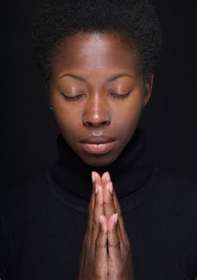
The Black Woman's Prayers

Shalom:

"Blessed are You, L-rd our G-d, King of the universe,
Who has made me according to His will."
(Part of the morning prayers)

On this day, I would like to honour the jewel in our crown, the heartbreak of every black family, the silence strength of our nation.
The Black Woman. Our Mothers, Sisters, Aunts. Our Soul.

One of the reasons I believe that we as a people have survived is because of the Black Woman.

She has stood tall and strong as a queen next to her king.
When dragging from her homeland in chains, she held in her heart, in her soul of the stories of home, the lessons learned at the knee of her mother.
She has worked the cotton fields beside her man, cared for the Big House and willed not to roll up into a ball a die when her man was stole to pay the Master's debt or see her Mistress hand her newborn baby to a relative as a birthday present.
And yet in the midnight hour she prayed. She prayed for freedom; for herself, for her man and children, for her people.
She taught her children to pray, to seek the face of their Creator, knowing it was not He that commanded their enslavement, but another. She gave them hope for a better day.
She passed that hope to her daughter, the daughter would past that hope on to her daughter and so it would go.
Until we were free.
But the Black Woman didn't stop praying.
On her knees while scrubbing other woman's floor, she prayed. While nursing another woman's child, she prayed. Working in another woman's kitchen, she prayed. She prayed for her husband to get that and keep that job. She prayed her children would be good in school and learn their lessons well. So that when her daughter grows up, the only floor she would scrub would be her own. That the only her son would open, would be the woman leading to his house.
Black Women prayed during times of war and peace. During good times and bad.
Black Women went from being maids and cooks to teachers, doctors and lawyer. Preachers, dancers and singers. Many would go to into business for themselves.
And many would chose to stay home and raise their children, create a peaceful, nurturing home.
The Black Woman's Prayers.
Prayers whisper next to a bedside, while sweeping a floor or nursing a baby.
The prayers of all women have been the force, the power, the strength of the family.
We who are alive today are the answers to those prayers utter in slavery.
May we each live our lives in a matter that makes our mothers pround.

Friday, 3 February 2012

Get Rid of The Box.


Shalom:
Race.
Whatever legal form one fills out, there is that four letter word.
Race.
That ugly little box we are asked to check-off.
I remember the first time I was given the option, Other. I smiled and wrote human.
I still do.
We are one race, the human race. We are various colours, various cultures, various beliefs. But the same race.
That's so simple, Laini.
Yes, I know. It is.
That very simple thought of respect for each other, as fellow human beings, would frankly stop war, hunger and crime. If only wewould see each other as Scrooge's nephew once stated; "all people as fellow travellers to the grave and not some other race of creatures bound on other journeys." (from a Christmas Carol)
When my mother was born, upon her birth records she was listed as, Coloured.
When my mother gave birth to me, upon my birth records I was listed as, Negro.
When I gave birth to my son, upon his birth records, he was listed as African American.
One day, those stupid little boxes will be done away with and we will be known as we truly are.
Human Beings.
Children of G-d

Thursday, 2 February 2012

Why Do We Need Black History Month?


Boker Tov:Yesterday began Black History Month.
I wanted to write this entry yesterday, but the day was rather busy.
Around the first week of the year, I received a summons for jury duty. My service began yesterday.
My first thought was 'oh joy.' But then I thought back to when I was in tenth grade.
It was social studies class and that year our class studied our legal system. This included having holding a trial in class.
I had been home for two week with the flu, but had kept up with my homework. So when I returned to class, I was shocked to learn I would be the Prosecutor, and I had to quickly get up to speed on the case.
I learn much from that class. My teacher said I would make a fine lawyer, but I have to admit I found it boring.
Turns out that was the very reason my mother chose not to go to law school.
So now, as an adult I get to be part of the progress. The last time I was in a courtroom, I was a witness. This time, a juror.
Of course the summons informed me it would be a long day and bring a book and sweater since the courtroom can be chilly. Pity I can't bring a piece of needle-point or a baby blanket to work on.
Mark is still in school and I don't like leaving Montague alone all day, we took our little dude to the neighbourhood doggie Daycare, Wags, where he had a great time and met new friends.
So, I showed early, went through security and headed off for the jury room, waiting for District Court to open.
While I waited, I overheard a conversation between two police officers. One was sharing how he would be going to his daughter's school later in the day. He would be speaking to the daughter's class about being a police officer. His wife, a lawyer would be there as well to share about being a lawyer.
But not just a police officer and lawyer. But a black officer and black lawyer.
It was then I remember that this was the beginning of Black History Month.
What a long way we have come. There was a time this couple would not be officers of the court, but cleaning it. There was a time, I would not have been called to serve as a juror. I would be cleaning the very lobby we are sitting in.
One hundred years ago, the only way I would live in the neighbourhood I call home is as live-in help.
Black History is American History. It is All Americans History. This nation was builded with the muscle, blood, sweat and tears of men, women and children, both sold and stolen from their homes and brought across the waters to another land, another world and enslaved for the rest of their lives.
That is part of this nation's history, like it or not.
I am the hope and dreams of my great-great grandparents who were amoug the slave force I speak of. They prayed one day their children or their childrens' children would taste and enjoy freedom.
We do.
We have come a long way. But we still have a long way to go.
That's why we still need Black History Month.

Friday, 18 February 2011

Madame CJ Walker; Part Two

Shalom:
We just arrived home and I found the following message concerning the post I wrote about Madame C.J Walker.
I for one wasn't aware that the company Madame Walker began is still in busniess and will be looking into obtaining the hair oils myself. With my new short do (another story) I could use all the help I can get:

From angierandolph said...

I just wanted to inform you and your readers of this very important fact – Madame C.J. Walker’s historic company still exists today and has never stopped manufacturing all of the original hair oils! Please visit our website at http://www.madamewalker.net to view and purchase the full product line. The website also contains valuable information about Raymond Randolph’s purchase of the original Madame C.J. Walker Manufacturing Company in 1985 from the Walker Trustees in Indianapolis, Indiana and how his family continues to keep Madame Walker’s “true” legacy alive. Due to our ownership of Madame’s historic company and the historical documents and memorabilia of the company, the Randolph Family can provide the most detailed and historically sound information about Madame C.J. Walker and her company by calling toll free, 866-552-2838 or going to the contact us page of our website.
Angela Randolph
http://www.madamewalker.net

Thank you Ms. Angela for stopping by and adding to my blog. You shall be hearing from me :)


Monday, 7 February 2011

Carter G. Woodson: the Father of Black History Month

                                                              Carter G. Woodson

                                      By Korey Bowers Brown
During the dawning decades of the twentieth century, it was commonly presumed that black people had little history besides the subjugation of slavery. Today, it is clear that blacks have significantly impacted the development of the social, political, and economic structures of the United States and the world. Credit for the evolving awareness of the true place of blacks in history can, in large part, be bestowed on one man, Carter G. Woodson. And, his brainchild the Association for the Study of African American

Life and History, Inc. is continuing Woodson’stradition of disseminating information about black
life, history and culture to the global community. Known as the “Father of Black History,” Woodson (1875-1950) was the son of former slaves, and understood how important gaining a proper education is when striving to secure and make the most out of one’s divine right of freedom. Although he did not begin his formal  education until he was 20 years old, his dedication to study enabled him to earn a high school diploma in West Virginia and bachelor and master’s degrees from the University Recognizing the dearth of information on the accomplishments of blacks in 1915, Dr. Woodson founded the Association for the Study of Negro Life and History, now called the Association for the Study of African American Life and History (ASALH).


Under Woodson’s pioneering leadership, the Association created research and publication outlets for black scholarswith the establishment of the Journal of Negro History (1916) and the Negro History Bulletin (1937), which garners a popular public appeal. In 1926, Dr. Woodson initiated the celebration of Negro
History Week, which corresponded with the birthdays of Frederick Douglass and Abraham Lincoln. In 1976, this celebration was expanded to include the entire month of February, and today Black History Month garners support throughout the country as people of all ethnic and social backgrounds discuss the black experience. ASALH views the promotion of Black History Month as one of the most important components of advancing Dr. Woodson’s legacy.In honor of all the work that Dr. Carter G. Woodson has done to promote the study of African American History, an ornament of Woodson hangs on the White House's Christmas tree each year.


Monday, 17 January 2011

Dr. Martin Luther King Still Speaks

Let freedom ring. And when this happens, and when we allow freedom ring—when we let it ring from every village and every hamlet, from every state and every city, we will be able to speed up that day when all of God's children—black men and white men, Jews and Gentiles, Protestants and Catholics—will be able to join hands and sing in the words of the old Negro spiritual: "Free at last! Free at last! Thank God Almighty, we are free at last!"

Dr. Martin Luther King
 
Shalom:
In the Reel home, Dr. King's birthday isn't viewed as a "day off." but to remember the life and legacy of Dr. Martin Luther King.

 Michael King, Jr., was born on January 15, 1929, in Atlanta, Georgia, the middle child of the Reverend Michael King, Sr. and Alberta Williams King. He had one older sister, Willie Christine and a younger brother, Alfred Daniel Williams.
 Both Dr. King and his father names were Michael originally, until the family traveled to Europe in 1934 and visited Germany. His father soon changed both of their names to Martin Luther in honor of the German Protestant leader Martin Luther.

As a young minister, Dr. King called for this nation to live up to her creeds. The army he raised up fought for the rights of those americans denied them, through marches, sit ins and boycotts.
In their hands were bibles and the hands tof those who walked with them. On their lips, prayers and songs. When attacked, they did not fight back. When a church was bombed and four little black girls were murdered, Dr. King did not call for revenage.
At 39 years old, Dr. King's voice was silenced by bullet. His four children forgave his murder.
But even all these years, we can still hear his voice, calling, challenging us to go higher.
We as a nation have come a long way, but we still have a ways to go.
Today, Mark and I reflected on the fact there was a time in this nation's history, our marriage would be illegal, we would be in jail.
There are people who still think our love is a crime.
All amercians are indebted to Dr. King. It is all of our job, not just his three surviving children and granddaughter to make his dream come true. For he still calls out...

"...Like an unchecked cancer, hate corrodes the personality and eats away its vital unity. Hate destroys a man's sense of values and his objectivity. It causes him to describe the beautiful as ugly and the ugly as beautiful, and to confuse the true with the false with the true."
"....The church must be reminded that it is not the master or the servant of the state, but rather the conscience of the state. It must be the guide and the critic of the state, and never its tool. If the church does not recapture its prophetic zeal, it will become anirrelevant social club without moral or spiritual authority."
Martin Luther King, Jr., Strength to Love, 1963
".I have a dream that one day on the red hills of Georgia, the sons of former slaves and the sons of former slave owners will be able to sit together at the table of brotherhood.”


Will we listen?


.

Thursday, 18 February 2010

Brooker T Washington

  Booker T. Washington.  Born April 5, 1856 in Hale's Ford, Virginia, U.S. Mr. Washington died November 14, 1915 at age 59 in Tuskegee, Alabama, U.S.
He was known as an Occupation Educator, Author, and African American Civil Rights Leader
and today several schools are named after him, my son attended the one here in Virginia

He was born into slavery to a white father and a slave mother in a rural area in southwestern Virginia.
After emancipation, he worked in West Virginia in a variety of manual labor jobs before making his way to Hampton Roads seeking an education. He worked his way through Hampton Normal and Agricultural Institute (now Hampton University) and attended college at Wayland Seminary. After returning to Hampton as a teacher, in 1881 he was named as the first leader of the new Tuskegee Institute in Alabama.
It wasn't until high school that I learned the T stood for Taliaferro.
Booker Taliaferro Washington was an American political leader, educator, orator and author. He was the dominant figure in the African American community in the United States from 1890 to 1915. Representing the last generation of black leaders born in slavery, and speaking for those blacks who had remained in the New South in an uneasy modus vivendi with the white southerners, Washington was able throughout the final 25 years of his life to maintain his standing as the black leader because of the sponsorship of powerful whites, substantial support within the black community, his ability to raise educational funds from both groups, and his skillful accommodation to the social realities of the age of segregation.
Mr. Washington received national prominence for his Atlanta Address of 1895, attracting the attention of politicians and the public as a popular spokesperson for African American citizens. He built a nationwide network of supporters in many black communities, with black ministers, educators, and businessmen composing his core supporters. He played a dominant role in black politics, winning wide support in the black community and among more liberal whites (especially rich northern whites). He gained access to top national leaders in politics, philanthropy and education. His efforts included cooperating with white people and enlisting the support of wealthy philanthropists, which helped raise funds to establish and operate thousands of small community schools and institutions of higher education for the betterment of blacks throughout the South, work which continued for many years after his death.
Northern critics called Dr. Washington's followers the "Tuskegee Machine." After 1909, Washington was criticized by the leaders of the new NAACP, especially W.E.B. DuBois, who demanded a harder line on civil rights protests.  Mr. Washington replied that confrontation would lead to disaster for the outnumbered blacks, and that cooperation with supportive whites was the only way to overcome pervasive racism in the long run. Some of his civil rights work was secret, such as funding court cases.
In addition to the substantial contributions in the field of education, Dr. Washington was the author of 14 books; his autobiography, Up From Slavery, first published in 1901, is still widely read today. During a difficult period of transition for the United States, he did much to improve the overall friendship and working relationship between the races. His work greatly helped lay the foundation for the increased access of blacks to higher education, financial power, and understanding of the U.S. legal system led to the Civil Rights Movement of the 1960s and adoption of important federal civil rights laws.
Mr. Washington is an example of one little boy of colour, born and raised of a single mother, who went on to change the world and make it a better place.